There is nothing quite like the first day of school.
The buses pull in. The floors are waxed to a shine that will not survive the week. Somebody’s little brother is crying in the drop-off line, a senior is walking in like she owns the place, and a first-year teacher is standing at her door with a hand-lettered sign and a stomach full of butterflies. Every August, all across Georgia, thousands of kids walk through a set of doors and start something.
For those of us who design schools, that morning is the whole point. We spend years getting there, through master planning meetings and budget conversations and utility routing and a third round of revisions to a lab layout nobody outside the design team will ever notice. Then one morning in August a fourteen-year-old walks in, finds her locker, and the building finally becomes a school.
That is the moment we design for, and it is also the moment that keeps sending us back to school ourselves.
Getting that morning right is a moving target, so we spend a lot of the year listening. Much of what follows we picked up at conferences like this year’s GA4LE Summer Conference at Jekyll Island, where we heard Dr. Valery Lowe of Forsyth County Schools and Dr. Tiffany Barney of the Cobb Innovation & Technology Academy talk about what career pathways actually require of a building. Some of it came out of conversations our own team has been part of, including a recent appearance on the Kay-Twelve education design podcast, Episode 344: Learning by Region at A4LE Georgia. And a good deal of it we learned the long way, over decades of designing Georgia schools and then watching what students and teachers did with them.
A few things have stuck.
A Pathway Starts Long Before Ninth Grade
Somewhere in that first-day crowd is a student who will graduate with a welding certification, or a CNA credential, or a portfolio of client work she built in a school studio. She probably doesn’t know it yet. Whether she finds that path has a lot to do with choices that were made years before she showed up.
Dr. Valery Lowe, Chief of Community Engagement and Lifelong Education for Forsyth County Schools, walked us through Forsyth’s “Pathways” initiative and made the case that workforce development runs on pipeline partnerships. A middle school career exploration night is the front end of a system that runs into high school programs and out again to real jobs with real employers a few years later. Treat it as an optional extra and the chain breaks early.
We hear that as a design charge. If a district is asking eighth graders to picture themselves in a career, the building had better be able to show them something worth picturing.
Flexibility Lives in the Infrastructure
Dr. Tiffany Barney, Executive Director of the Cobb Innovation & Technology Academy, has spent years turning pathways into physical, tuition-free, career-ready environments that look nothing like the shop class most of us remember. What stuck with our team was her insistence that the flexibility that matters is in the infrastructure, not the furniture.
In practice that means adaptable utility grids, power and data that can be reconfigured without a renovation, and ceiling heights and floor loads that leave room for equipment nobody has specified yet. Advanced health sciences and emerging maker industries aren’t going to hold still for a twenty-year building cycle, and a room is only as adaptable as the systems feeding it.
These programs also need two things at the same time. They need lab credibility, meaning equipment and finishes that match what students will actually encounter on the job. And they need visibility: glass instead of block, programs on display in the main corridor rather than tucked away behind the gym. A student can’t choose a pathway she has never seen.
The Building Belongs to the Community
When local businesses, chambers of commerce, and civic leaders come into master planning early, rather than seeing the renderings at the end, the building starts doing more work. It becomes a pipeline supplying skilled labor to employers a few miles away. It becomes a place for adult certification, evening programs, and industry training. Districts get more out of the same capital dollars, and communities get to keep their talent at home.
At that point the building has stopped being only a school. It’s a workforce incubator that also happens to be where the football team practices.
From Sprayberry Forward
None of this is new to us, exactly. It’s a conversation our team has been part of for decades.
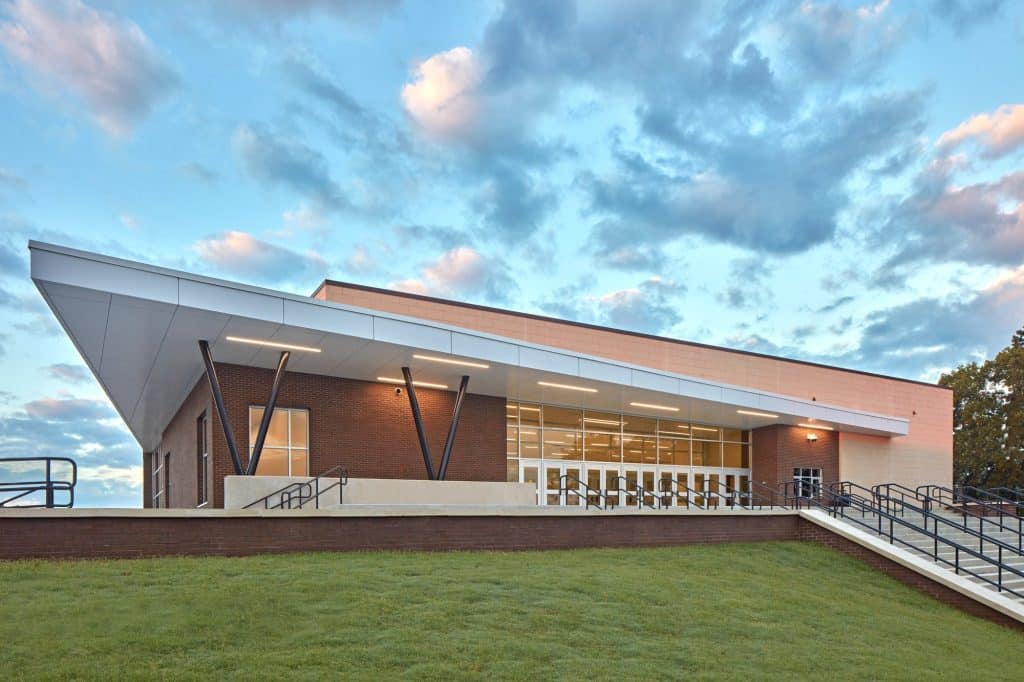
Sprayberry High School in Cobb County is a good example. Comprehensive high schools like Sprayberry weren’t originally built around career and technical programming, so as the county’s needs changed, the campus had to change with them. Our team designed the school’s CTAE building, and working that problem through taught us a great deal about fitting industry-grade space onto a campus that already had its own logic.
What all those years have taught us is that career-education architecture is a balancing act between specialized equipment on one side and communal, collaborative space on the other. The technical spaces earn the credibility. The shared spaces are where students figure out who they’re working alongside and what they want. Whether it’s a dedicated regional academy like CITA or a pathway wing in a comprehensive high school, the secret is intentional versatility.
If you’re thinking about how to update an older footprint to support modern CTAE technology before the next first day comes around, let’s talk.
To Our GA4LE Community
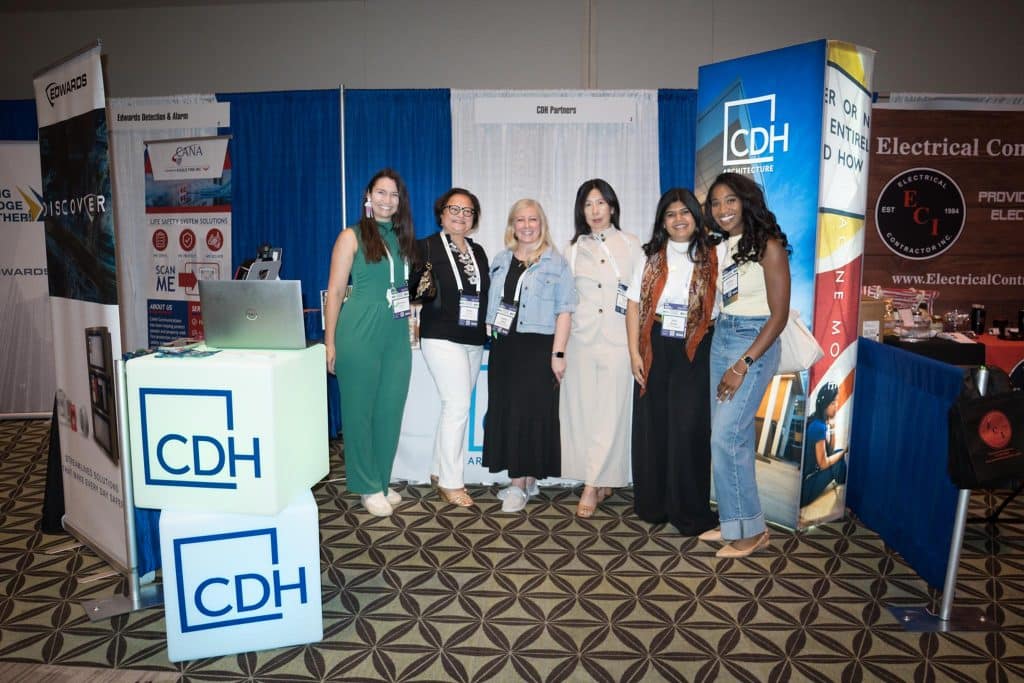
We got to talk through a lot of this at Jekyll Island this summer as a Platinum Sponsor of the 2026 GA4LE Summer Conference. Thank you to everyone who stopped by the beach photography sessions or found us in the exhibit hall. Those conversations shape how we approach every project that follows. (Check out the gallery below to see pictures from our beach photo session.)
And to every teacher, principal, custodian, bus driver, and facilities director who made this first day happen: we hope it was a good one.